How to Choose the Best Menstrual Heat Patch Supplier?
Menstrual pain is a widespread need, but product quality can vary sharply between suppliers. A 2019 systematic review and meta-analysis in the Journal of Women’s Health estimated that dysmenorrhea affected 71.1% of young women studied. That figure does not represent every age group or market, but it shows why reliable menstrual comfort products matter. For buyers, a Menstrual Heat Patch is more than a warm pad in neat packaging.
The right supplier should be able to explain how heat output, wear time, adhesive performance, and skin-contact materials are checked. Ask for test reports, sample specifications, batch traceability, and clear instructions for use. Look closely at the patch itself: Does it warm evenly? Does the adhesive stay secure without making removal difficult? Small details matter. So does the paperwork behind them. Production capacity, minimum order quantities, lead times, and responsive communication also affect whether a promising sample can become a dependable product line.
This guide explores how to assess suppliers using evidence rather than polished sales claims. It also considers quality controls, product development support, and the practical questions buyers should ask before placing an order. No checklist is perfect. A first review may focus too heavily on certificates and miss a weak sample, so both documents and hands-on evaluation deserve attention. Careful comparison takes time. It can help buyers choose a supplier that is transparent, consistent, and equipped to support real customer needs.
Define Your Menstrual Heat Patch Product Requirements
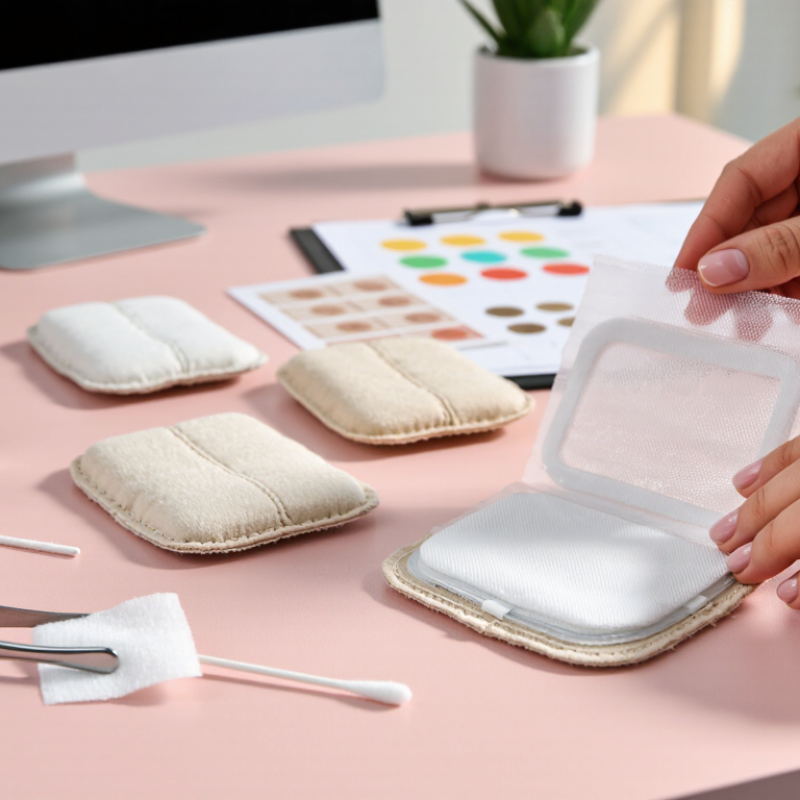
Before comparing suppliers, write a clear product brief. Decide who will use the patch, where it will sit, and how long it should provide warmth. A slim patch for a workday may need different dimensions and packaging from one used at home. Specify the target temperature range and heating duration, then ask how the supplier measures both. Comfort matters. A warm patch that feels bulky or shifts under clothing may not suit everyday use.
Describe the construction you expect, including the heat-generating layer, outer fabric, adhesive, and any skin-contact materials. State whether the patch is intended for direct skin contact or use over clothing. Include practical details such as individual sachets, opening instructions, and warning text. Small details count. A difficult wrapper can make an otherwise good product frustrating to use. Ask for samples and test them during realistic routines, not only on a desk.
Set measurable acceptance criteria before requesting quotations. These might include patch size, weight, heating consistency, odor, packaging quality, and shelf-life evidence. Request relevant test records and clear explanations of how results were obtained. Supplier documents are useful, but they do not replace your own sample checks. Be prepared to revise the brief: early assumptions about warmth or adhesive may not hold up in wear trials. Record each change so competing suppliers are assessed against the same requirements.
Verify Supplier Experience, Certifications, and Manufacturing Capacity
Supplier experience should be checked with specific questions, not a polished company profile. Ask how long the team has produced wearable heat patches and which formats it handles. Request sample batch records, change-control notes, and examples of production issues corrected. Details matter. A vague claim of “many years” proves little, and references should relate to similar products.
Review quality certificates carefully. Check the issuing body, validity dates, covered factory, and product scope. Ask whether the supplier’s quality system fits your product and intended market. A certificate is not proof that every batch meets your requirements. Request recent audit findings, calibration records, and incoming-material checks. You can also ask for test reports showing heat output over time, package integrity, and batch-to-batch consistency. Not enough? Ask what happens when results fall outside specification.
Manufacturing capacity needs evidence too. Ask for monthly output, current line utilization, normal lead times, and plans for peak demand. Confirm who checks production records and how rejected units are handled. A large figure on a brochure can hide limited available capacity. A neat spreadsheet can still miss shift changes or maintenance delays, so discuss a real production schedule. Capacity claims deserve a second look.
How to Choose the Best Menstrual Heat Patch Supplier
Suggested evaluation weights for comparing supplier experience, certifications, manufacturing capacity, quality systems, and traceability.
These percentages are a practical buyer-defined scoring framework, not industry statistics. Verify certifications, production capabilities, and quality records directly with each supplier.
Evaluate Patch Safety, Materials, and Quality-Control Processes
A reliable menstrual heat patch supplier should provide temperature maps, ingredient specifications, and batch-level test records—not just a polished certificate. Ask how the patch performs across its full heating cycle, including the first hour, when temperature changes can be easy to miss. ISO 13732-1:2006 lists contact burn thresholds that vary by surface material; for one-minute contact, reference values are about 51°C for metal, 56°C for ceramic, and 60°C for plastic or wood. These are not pass limits for a wearable patch, but they show why material and contact time matter. Small details matter. Request testing on the finished patch against skin-facing materials, not only on loose heating ingredients.
Check that suppliers identify every layer, adhesive, fragrance, and heating component, then explain how they assess skin-contact safety. Their quality records should link incoming-material checks, temperature uniformity, seal integrity, and lot traceability. ASTM F1980-21 uses a Q10 value of 2 as a common accelerated-aging assumption for medical-device packaging; it can help plan shelf-life studies, but it does not replace real-time testing. Ask for both. A neat certificate is not enough. In practice, supplier documents may still leave gaps, so review sample test reports and investigate unexplained temperature variation before approving production.
Test Samples and Confirm the Supplier Before Ordering
Before placing a bulk order, request samples from the exact production line and material specification you plan to buy.
Grand View Research’s 2023 feminine hygiene products report valued that market at
US$42.7 billion in 2022;
this figure covers a broad category, not heat patches alone. In a crowded market, clear product evidence matters.
Looks can mislead.
Test each sample on clothing and skin, following its instructions. Record how quickly it warms, whether the temperature stays comfortable, and how well the adhesive holds during normal movement. Check the ingredient and material disclosures, lot coding, pouch seal, and expiry or shelf-life information. Ask for relevant skin-contact safety reports and confirm that test results match the supplied sample.
Test it twice.
A single comfortable trial is useful, but it cannot establish consistency across batches.
Before approving production, request samples from more than one lot if possible. Compare warmth, odor, patch dimensions, and adhesive residue; note any differences rather than dismissing them. Ask the supplier for written specifications, quality-control records, and a process for handling defects. ISO 2859-1 describes acceptance sampling for inspection, so discuss a suitable sampling plan and acceptance criteria before shipment. Do not rely only on polished sales samples. A small trial order may reveal problems, though it cannot guarantee every later batch.
Keep your own dated samples and inspection notes as a reference.