DOWNLOAD CATALOG
Leave Your Message

China Top Heat Pads for Back Pain Wholesale Buyers

China has become a major sourcing center for heat pads designed for back discomfort. Wholesale buyers can find reusable gel pads, electric heating belts, adhesive warmers, and microwavable options. Each format serves a different retail need.

This guide examines reliable suppliers, product materials, factory experience, and export readiness. It also considers temperature control, heating duration, fabric comfort, packaging, and private-label support. Buyers searching for Heat Pads Back Pain products should request current test reports and clear usage instructions. These details help reduce quality disputes and protect end users.

Experienced manufacturers usually provide samples before large orders. A sample can reveal uneven heating, weak stitching, unpleasant odors, or confusing controls. Small details matter.

Certifications should match the product type and destination market. Electric models need stronger attention to insulation, plug standards, heat limits, and electrical safety testing. Non-electric products still require careful review of ingredients, skin-contact materials, and warning labels. Compliance evidence should come from recognized laboratories or qualified institutions, not only supplier claims.

Pricing deserves practical analysis. The lowest quotation may exclude testing, custom packaging, spare parts, or shipping protection. Buyers should compare total landed cost, minimum order quantities, lead times, and warranty terms. Some suppliers communicate well before payment but respond slowly after production begins. That risk is easy to overlook.

No supplier is perfect. Even reputable factories may face seasonal delays or material changes. A careful purchasing process includes written specifications, pre-shipment inspection, and documented communication. With balanced research, wholesale buyers can select heat pads that offer dependable performance, responsible claims, and suitable value for their customers.

China Top Heat Pads for Back Pain Wholesale Buyers

Global Demand: WHO Estimates 619 Million People Had Low Back Pain in 2020

China Top Heat Pads for Back Pain Wholesale Buyers

The global need is substantial. The World Health Organization estimates that 619 million people had low back pain in 2020. It also projects 843 million cases by 2050, driven partly by population growth and aging. These figures come from WHO’s 2023 low back pain report. They show why heat pads attract attention from healthcare retailers, pharmacies, and workplace suppliers.

Wholesale demand should follow evidence, not advertising alone. A 2021 Global Burden of Disease analysis identified low back pain as the leading cause of disability worldwide. Heat can provide short-term relief for some non-specific back pain. The Cochrane review on superficial heat found modest benefits for pain and function. Results vary. A heat pad is not a cure.

Buyers should examine temperature stability, timer controls, washable covers, and clear operating instructions. Check electrical certifications for the destination market. Ask suppliers for test records, material specifications, and batch traceability. Soft fabrics matter when users apply pads while seated for hours. But comfort can hide overheating. That risk deserves attention.

The 619 million estimate is powerful, yet it is not a direct sales forecast. Population, income, climate, and healthcare access differ widely. Buyers may over-order popular sizes and miss smaller demand segments. Trial shipments can reduce that mistake. Packaging should state intended use, skin-protection guidance, and when medical advice is needed. Evidence-informed sourcing is slower, but often more reliable.
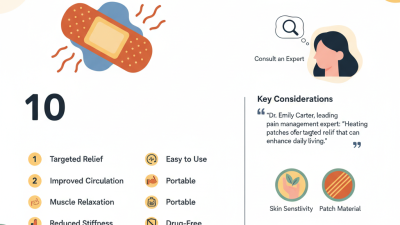
Global Low Back Pain Burden and Long-Term Demand Context

The World Health Organization estimated that approximately 619 million people experienced low back pain globally in 2020. The number is projected to reach about 843 million by 2050, highlighting a growing need for accessible, non-invasive comfort and self-care solutions such as heat therapy. These figures describe global disease burden, not heat-pad sales or company performance.

Source: World Health Organization, “Low back pain” fact sheet.

Heat Therapy Basics: Clinical Studies Commonly Use 40–45°C Surface Temperatures

China Top Heat Pads for Back Pain Wholesale Buyers

Heat therapy research commonly uses surface temperatures around 40–45°C. This range can deliver soothing warmth without relying on extreme heat. However, surface temperature is not the same as skin temperature. Fabric thickness, pressure, room conditions, and moisture can change the user’s experience. A pad reading 42°C in testing may feel cooler or hotter during daily use.

Wholesale buyers should request clear temperature data, stable control settings, and safety test records. Look for gradual heating, automatic shutoff, and even warmth across the treatment area. Practical evaluations should check the pad on a flat surface and during normal body contact. Temperature alone does not tell the whole story. That part is easy to overlook. Clinical findings can guide product design, but they do not guarantee identical results for every user. Clear instructions should recommend checking comfort regularly and avoiding direct contact with irritated skin.

Tips: Ask suppliers whether the stated 40–45°C refers to the surface, heating element, or actual skin-contact zone. Review testing methods, not only marketing numbers. A lower setting may be more suitable for longer sessions. Buyers should also consider users with reduced heat sensitivity, who may need extra caution.

Product Types: Compare Electric, Microwavable, Chemical, and Infrared Heat Pads

China Top Heat Pads for Back Pain Wholesale Buyers

WHO reports that 619 million people experienced low back pain in 2020, with cases projected to reach 843 million by 2050. This supports steady demand for practical, non-invasive comfort products. Grand View Research’s heating pads market analysis reports growth above 5% annually through 2030, while electric designs remain a leading segment.

Electric heat pads suit clinics, pharmacies, and home-care retailers. They offer adjustable temperatures, timers, and repeat use. Buyers should request electrical safety testing, including IEC 60335-2-17 compliance where applicable.

Microwavable pads use wheat, clay, or gel inserts. They feel softer and need no cable, but heating time varies by microwave power. Moisture can also affect shelf life.

Chemical pads are thin, portable, and convenient for travel. However, activation instructions, packaging integrity, and storage temperature need strict control. A low unit price can mislead.

Infrared pads usually use carbon or ceramic heating elements. Suppliers often promote deeper warmth, but wholesale buyers should demand measurable temperature data, not vague medical claims. Compare surface temperature, heating uniformity, controller durability, and energy consumption. I would not treat infrared as automatically superior. That assumption needs testing.

For China sourcing, sample at least three production batches, record heat-up time, inspect stitching, and check odor after repeated use. Packaging should show clear warnings against sleeping with heated products or applying them to numb skin. Wholesale success depends on comfort, repeatability, and honest specifications.

China Supplier Evaluation: Verify ISO 13485, CE, RoHS, MOQ, and Factory Capacity

China remains a practical sourcing base for wholesale heat pads designed for back pain relief. However, a low quotation is not enough. Experienced buyers should verify the supplier’s ISO 13485 certificate, including its scope, validity, and issuing organization. The certificate should cover the relevant medical device activities, not unrelated products. Ask for controlled production records, complaint handling procedures, and batch traceability. These details show whether quality management works beyond paperwork.

CE documentation also requires careful review. Request the declaration of conformity, applicable test reports, and product labeling samples. RoHS evidence should identify the tested materials and laboratory details. Check whether the documents match the exact heat pad model, plug type, fabric, and controller. Small mismatches can create costly delays. A certificate file may look complete. It can still hide weak verification.

Tips: Request a factory video tour, then compare it with the audit report. Count assembly stations, testing equipment, warehouse space, and trained operators. Confirm monthly capacity during peak seasons, not only normal periods. Clarify MOQ by model, color, packaging, and private-label requirements. Ask for a pilot order before committing to large volume. This is slower, but safer. Also, inspect sample temperature stability and cable strain resistance. My own evaluation mistake was trusting stated capacity without checking production schedules. Capacity is not just equipment; it is available labor, tested output, and consistent supervision.

China Top Heat Pads for Back Pain Wholesale Buyers - China Supplier Evaluation: Verify ISO 13485, CE, RoHS, MOQ, and Factory Capacity

Buyer-side evaluation checklist for electric heat pads intended for back-pain comfort applications. Certification scope, product claims, minimum order quantity, and production capacity must be confirmed with current documentary evidence before purchase.
Evaluation Dimension What the Buyer Should Verify Relevant Evidence or Data Wholesale Buyer Benchmark Review Status Priority
ISO 13485 Quality System Whether the manufacturer holds a valid ISO 13485:2016 certificate covering the applicable manufacturing site and product scope. Certificate number, certification body, issue date, expiry date, site address, scope of certification, and certificate verification link. Certificate should be current, independently verifiable, and issued for the actual factory producing the heat pad. Required to Verify High
CE Compliance Whether the finished product complies with the European Union requirements applicable to its design, voltage, intended use, and claims. EU Declaration of Conformity, technical documentation, risk assessment, applicable test reports, product labeling, user instructions, and authorized representative details where required. Do not rely on a logo alone. Confirm the applicable legislation and that the documents identify the same model, manufacturer, and electrical ratings. Required to Verify High
RoHS Compliance Restriction of hazardous substances in electrical and electronic components supplied to relevant markets. RoHS test report or technical file covering homogeneous materials, including cables, plugs, controllers, heating elements, plastics, and soldered parts. Report should identify the tested model or component family and use a laboratory method suitable for the applicable market requirement. Required to Verify High
Electrical Safety Protection against electric shock, overheating, short circuit, abnormal operation, and insulation failure. Electrical safety test report, insulation and dielectric-strength results, leakage-current results, fuse or protection details, wiring diagram, and controller specifications. Safety testing must match the final commercial configuration, including the power adapter, controller, plug, cable length, and heating pad. Required to Verify High
Temperature Control Accuracy and stability of temperature settings during normal use and under abnormal conditions. Number of heat levels, operating temperature range, temperature tolerance, sensor type, automatic shut-off time, and over-temperature protection test results. Prefer independent temperature sensing, automatic shut-off, clearly marked controls, and documented protection against overheating. Verify by Sample High
Product Intended Use Whether the product is sold as a general wellness warming product or as a medical device with therapeutic or pain-treatment claims. Product label, packaging, website claims, instructions for use, classification rationale, clinical or performance evidence, and market-specific regulatory records. Claims must be consistent across packaging, advertising, instructions, and regulatory documentation. Avoid unsupported treatment claims. Required to Verify High
Material and Skin Contact Safety Suitability of fabrics, fillings, coatings, dyes, and contact surfaces for repeated skin contact. Material composition, restricted-substance declarations, colorfastness data, wash-care instructions, and skin-contact or textile safety test reports where applicable. Request material samples and confirm that the production material is identical to the approved sample. Verify by Sample
Product Configuration Key specifications required for wholesale comparison and landed-cost calculation. Pad dimensions, net weight, rated voltage, rated power, controller type, heating zones, cable length, plug standard, packaging dimensions, and unit weight. Use a signed product specification sheet and a golden sample before approving mass production. Benchmark High
Minimum Order Quantity MOQ for standard stock, custom logo, custom packaging, custom colors, and engineering changes. Written quotation showing MOQ by configuration, sample fee, tooling fee, packaging threshold, deposit terms, and price validity period. Evaluate MOQ separately for stock units and customized production; a lower MOQ may involve higher unit cost or limited customization. Obtain Written Quote High
Factory Capacity Whether the factory can meet forecasted volume without compromising inspection, lead time, or traceability. Monthly capacity by product type, number of production lines, working shifts, critical-process equipment, staffing, production schedule, and recent shipment records. Compare confirmed monthly output with the buyer's peak forecast and require a capacity plan for seasonal demand. Audit Required High
Production Lead Time Time from deposit and artwork approval to finished-goods readiness for standard and customized orders. Sample lead time, first-order lead time, repeat-order lead time, raw-material availability, holiday schedule, and documented delivery assumptions. Lead time should be stated separately for samples, standard production, custom packaging, and tooling-dependent orders. Obtain Written Quote
Quality Control Process Controls applied from incoming materials through assembly, aging, final inspection, and packing. Incoming inspection records, in-process inspection plan, electrical safety checks, temperature tests, aging-test duration, final AQL plan, and corrective-action records. Require traceable inspection records for every batch and define acceptance criteria before the purchase order is issued. Required to Verify High
Factory Auditability Whether the declared manufacturing location and key production processes can be independently inspected. Business license, factory address, production-area photographs or live video, process flow, subcontractor list, audit access, and corrective-action response time. Prefer a factory that permits pre-production, in-process, and pre-shipment inspections by the buyer or an independent inspection agency. Audit Required High
Packaging and Labeling Compliance of retail packaging, carton marks, warnings, instructions, and importer information with the destination market. Artwork proof, carton dimensions, barcode requirements, user manual language, safety warnings, recycling marks, model number, batch code, and country-of-origin marking. Approve final artwork before production and ensure all labels match the tested and documented product configuration. Approve Before Production
Warranty and After-Sales Support Supplier responsibility for defects, returns, spare controllers, replacement parts, and technical support. Warranty period, defect-rate definition, replacement policy, response time, spare-parts pricing, complaint procedure, and field-failure reporting process. Define warranty coverage and remedy in the sales contract rather than relying on informal messaging. Contract Required
Pre-Shipment Approval Final confirmation that mass-produced goods match the approved sample and purchase-order specifications. Inspection checklist, random-sampling plan, functional test results, packaging inspection, carton quantity, shipping marks, and photographic evidence. Release payment or shipment only after agreed inspection criteria are met or a documented deviation is accepted. Required to Verify High
Note: ISO 13485 certification, CE conformity, RoHS compliance, MOQ, production capacity, and test reports are not interchangeable. Each item should be verified against the exact model, manufacturing site, destination market, and final production configuration.

Wholesale Quality Control: Test Temperature Uniformity, Safety, Durability, and Packaging

Wholesale buyers should test heat pads under real operating conditions, not only inspect their appearance.

The World Health Organization reported 619 million people experienced low back pain in 2020, with cases projected to reach 843 million by 2050. That demand increases the cost of inconsistent heating.

Place calibrated temperature sensors across the pad, including corners and cable-side zones. Record readings at startup, 30 minutes, and the product’s maximum setting. A practical acceptance target is a narrow temperature spread, such as ±3°C, but buyers should confirm the limit against their market requirements and applicable standards.

Safety testing needs patience. Check insulation, wiring strain relief, controller resistance, and automatic shutoff repeatedly. IEC 60335-2-17 provides relevant safety requirements for flexible heating appliances.

Do not rely on one successful sample. Test several units from different cartons and production dates. A missed hot spot can damage fabric or cause skin discomfort. It may also expose weak quality control.

Durability testing should include repeated bending, washing where permitted, connector cycling, and continuous operation. Inspect the heating wire after each cycle.

Packaging deserves equal attention. Drop cartons from practical warehouse heights, then check cracked controllers, shifted inserts, and dampness barriers. Our inspection plans are rarely perfect; an attractive box can hide poor cushioning.

Photograph every defect, link it to the batch, and require corrective evidence before shipment. WHO data shows the need, but consistent factory records prove reliability.