DOWNLOAD CATALOG
Leave Your Message

2026 Best Detox Foot Patches for Wholesale Buyers

Wholesale demand for wellness products is growing, but detox claims still need careful scrutiny. The Global Wellness Institute’s 2024 Global Wellness Economy Monitor valued the worldwide wellness economy at $6.3 trillion in 2023 and projected growth to $9 trillion by 2028. This broad measure includes many sectors; it does not establish demand for, or the effectiveness of, foot patches. That distinction matters.

For buyers considering Patch Detox Foot products in 2026, practical due diligence starts with the product itself. Review full ingredient lists, supplier documentation, batch traceability, adhesive specifications, and packaging stability. Ask how the patch performs after several hours against warm, damp skin. Small details count. A darkened patch after use is not, by itself, proof that toxins left the body. Current clinical evidence does not establish that detox foot patches remove toxins through the feet, so avoid treating marketing language as a medical finding. Check that product descriptions and labels are supportable in the markets where you plan to sell.

The category can still merit evaluation as a personal-care product, provided expectations remain realistic. Compare sample quality, odor, fit, residue, and reported skin sensitivity across batches. One weak point in many buying decisions is the assumption that attractive packaging signals reliable formulation. It does not. This guide focuses on sourcing, quality checks, transparent claims, and wholesale considerations, while recognizing that product performance and customer response may vary. A cautious review takes longer. It can also prevent expensive surprises.

2026 Best Detox Foot Patches for Wholesale Buyers

What Detox Foot Patches Are and How Their Claims Are Evaluated

2026 Best Detox Foot Patches for Wholesale Buyers

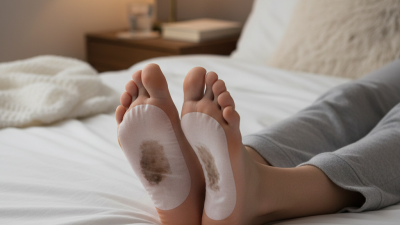
Detox foot patches are adhesive pads worn on the soles, often overnight. Many contain absorbent materials, plant extracts, or minerals. Their darkened appearance after use is not proof that toxins left the body; moisture and ingredients can change the pad’s color. That detail matters.

Claims should be checked against human studies, not product demonstrations or color changes. A 2015 review by Klein and Kiat in the Journal of Human Nutrition and Dietetics found few clinical studies of detox diets, with weak methods and no convincing evidence. The review did not test foot patches specifically. The U.S. National Center for Complementary and Integrative Health likewise notes limited evidence for detox and cleanse claims. For wholesale buyers, request study methods, measured outcomes, and testing on the finished patch. Be cautious when a claim promises removal of heavy metals or other toxins without independent clinical data.

Tips: Check that packaging describes ingredients and use clearly. Ask suppliers for safety and quality documents. A glossy pad is not a clinical result. Even good paperwork cannot replace reliable human evidence.

Key Ingredients, Patch Designs, and Product Categories

For wholesale buyers, ingredient lists are a practical starting point, not proof of detoxification. Common formulas use bamboo vinegar, charcoal, mineral powders, or botanical extracts. Ask suppliers for full composition, allergen details, and batch-level quality records. Claims need scrutiny. Foot patches are best described as personal-care products; evidence does not establish that they remove toxins through the feet.

Patch design affects comfort, placement, and packaging efficiency. Many products use a porous nonwoven layer, an absorbent center, and a skin-contact adhesive. Compare patch size, edge sealing, adhesive residue, and wear time using repeatable tests. Some buyers prefer individually wrapped night patches; others need compact packs for travel or retail trial sizes. Small details matter. Sensitive-skin options should be assessed for fragrance, adhesive ingredients, and irritation potential, rather than relying on a label alone.

Useful product categories include herbal-blend patches, charcoal-focused formulas, fragrance-free versions, and simple entry-level packs. These labels describe formulation or positioning, not clinical performance. Before placing a large order, request samples and check odor, powder leakage, adhesion after several hours, and packaging clarity. Results can vary with skin, climate, and storage. That uncertainty is worth documenting.

2026 Best Detox Foot Patches for Wholesale Buyers - Key Ingredients, Patch Designs, and Product Categories

Product Category Common Ingredients or Materials Typical Patch Design Wholesale Buyer Considerations Evidence and Claims Guidance
Classic botanical foot patches Bamboo vinegar or wood vinegar powder, plant extracts, and a dextrin-based powder carrier are common in this product category. Powder-filled sachet fixed to an adhesive-backed, nonwoven patch for overnight wear. Check the full ingredient list, sachet integrity, adhesive performance, package instructions, and supplier documentation. Confirm that the patch is intended for external use. There is no reliable clinical evidence that these patches remove toxins through the feet. Avoid presenting color changes or residue as proof of detoxification.
Herbal blend patches May include botanical powders or extracts, such as ginger, mugwort, or other herbs, alongside a powder carrier. Single-use adhesive patch with a sealed ingredient sachet; often marketed for overnight use. Request ingredient specifications and allergen information. Review local labeling rules and ensure any listed botanicals match the product documentation. Herbal ingredients do not establish a detox effect. Avoid disease-treatment, circulation, or other medical claims unless appropriately supported and permitted.
Mineral or tourmaline-style patches May contain tourmaline powder or other mineral ingredients mixed with a carrier and adhesive components. Adhesive-backed fabric patch with a contained powder blend. Ask for composition and safety documents, including information on the powder and adhesive. Check that the patch stays intact during normal use and removal. The presence of minerals does not demonstrate toxin removal or a therapeutic effect. Evaluate marketing language against applicable advertising requirements.
Moisture-absorbing patch formats Typically use absorbent powders or carriers within a sachet; formulations vary by supplier. Powder sachet bonded to a breathable backing, designed to be worn against the sole. Assess sachet sealing, backing breathability, adhesive residue, and clear wear and disposal instructions. Consider how the product performs under humid storage conditions. A damp or discolored patch can result from moisture and ingredient interaction; it is not, by itself, evidence that toxins have been removed from the body.
Adhesive-free or low-adhesive alternatives May use a fabric pouch, wrap, or reduced-adhesive construction with a similar powder blend. Foot wrap, sock-compatible pouch, or patch designed to minimize direct adhesive contact. Useful to compare for customers who prefer less adhesive contact. Verify fit, retention during wear, material composition, and any relevant skin-contact testing. Changing the attachment design does not change the evidence for detox claims. Include suitable cautions for sensitive or irritated skin.
Single-pair retail packs Ingredient blend varies; commonly includes a powder sachet, patch backing, adhesive, and individual packaging. One pair per sealed pouch or carton, intended for a trial or short-use purchase. Compare pack labeling, unit count, traceability, and packaging durability. Request the supplier’s stated shelf life and storage conditions rather than assuming them. Describe the product as a foot patch or personal-care item unless its regulatory status and permitted claims have been established for the target market.
Multi-pair value packs Usually the same formulation as a smaller pack, offered with more individually wrapped patches. Several pairs grouped in a carton or resealable outer package. Check that individual patches remain protected after the outer pack is opened. Confirm lot coding, instructions, and the number of patches per package. Do not imply that longer or repeated use provides a proven detox benefit. Keep usage guidance consistent with the product’s verified instructions.

Criteria for Comparing Detox Foot Patches in 2026

Wholesale comparisons should begin with evidence, not packaging claims. McKinsey’s 2024 Future of Wellness survey found that 82% of US consumers consider wellness a top or important priority. That signals category interest, not proof that foot patches remove toxins. The US National Center for Complementary and Integrative Health notes that evidence supporting detox approaches is limited. Buyers should therefore check whether product claims match published evidence and avoid claims of medical or measurable detox effects without sound support.

Review the ingredient list, patch dimensions, adhesive details, and clear-use instructions. Request batch-specific certificates of analysis, including stated test methods and results for relevant contaminants. Ask whether skin-compatibility testing was performed, and review the actual report rather than a brief sales summary. Small details matter. Compare samples after several hours of wear: edges may lift, and adhesive residue can vary. These checks are practical, but they do not replace independent testing. I would also compare packaging durability, lot coding, and shelf-life documentation across production batches. Some suppliers provide neat paperwork yet little detail about methods; that gap deserves a follow-up before placing a large order.

Wholesale Sourcing, Supplier Checks, and Regulatory Considerations

2026 Best Detox Foot Patches for Wholesale Buyers

Wholesale Sourcing, Supplier Checks, and Regulatory Considerations

Wholesale buyers should treat detox claims with caution. There is limited reliable evidence that foot patches remove toxins from the body. A darker patch after use is not proof of detoxification; moisture and ingredients can change its color. Ask suppliers for a complete ingredient list, manufacturing details, and recent quality-control records. Request samples and inspect the adhesive, scent, packaging seals, and instructions before placing a large order. Small details matter.

Tips: Check supplier documents against the product you receive. Confirm batch numbers, shelf life, and storage conditions. Ask whether testing covers contaminants and skin irritation. Keep written records. A checklist helps, but it is not perfect; documents still need careful review.

Regulatory requirements differ by destination and by product claims. Have qualified local advisers review labels, warnings, ingredient disclosures, and any claims before import or sale. Avoid language that promises medical outcomes or toxin removal unless the claim is properly supported and permitted in that market. Confirm who handles complaints and product recalls. If a supplier gives vague answers or changes specifications without notice, pause the purchase and investigate. A low unit price may not cover the cost of weak documentation or inconsistent batches.

Matching Product Features to Wholesale Buyer Needs

2026 Best Detox Foot Patches for Wholesale Buyers

Matching Product Features to Wholesale Buyer Needs

Wholesale buyers need more than an appealing package. They need a product that stores, ships, and sells predictably. For foot patches, check the backing material, adhesive strength, scent, and pouch seal. A patch should stay in place overnight without leaving a difficult residue. Small details matter. Ask for samples and test them on different skin types before placing a large order.

Match pack sizes to your sales channel. Individual sachets suit travel shops and trial purchases, while multipacks may work better for online bundles. Compare carton dimensions, minimum order quantities, and stated shelf life. A low unit price can lose its appeal if bulky cartons raise freight costs. I would also check whether the printed instructions are easy to read; tiny text can frustrate customers.

Keep product claims grounded. “Detox” is often used as a wellness marketing term, but buyers should not assume a foot patch removes toxins or treats illness. Request clear ingredient information and documentation supporting any performance claims. That extra review may slow sourcing a little. It can also help prevent misleading listings and disappointed customers. Test packaging for leaks, inspect batch consistency, and choose a supplier that answers specific questions in writing.