Leave Your Message
Choosing a Hand Warmer manufacturer in China takes more than comparing catalog prices. Product photos rarely show how evenly a warmer heats, how firmly its casing closes, or how consistently units perform across a production run. Small details matter. A loose charging port or unclear instruction sheet can become a real problem after delivery.
This guide introduces ten manufacturers for buyers researching disposable heat packs, rechargeable warmers, or related products. The list is a starting point, not a universal ranking. A supplier that suits a promotional order may not fit a retailer’s long-term needs. Compare each company’s product range, manufacturing capabilities, quality-control procedures, customization options, and communication before making contact. Ask for current specifications and sample units. Check how the supplier documents temperature performance, battery capacity where relevant, materials, and packaging. These details help turn broad promises into questions that can be answered.
Experience with sourcing also means looking beyond a polished brochure. Confirm production lead times, minimum order quantities, warranty terms, and what happens when a sample differs from a bulk shipment. Request supporting records for any quality or safety claims, and verify that documents match the exact product being quoted. A supplier may look strong online yet provide limited detail during follow-up. That deserves a closer look. The manufacturers featured here can help readers build a practical shortlist, but final selection should depend on verified product samples, clear specifications, and the buyer’s market requirements. Good sourcing takes patience. Sometimes the best choice is simply the one that answers clearly.
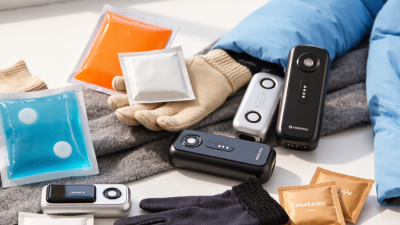
China-made hand warmers generally fall into three types: air-activated disposable packs, reusable crystallizing packs, and rechargeable electric models. Disposable packs use iron powder, salt, water, and carbon; exposure to air starts a slow heat-producing reaction. Reusable packs contain a supersaturated solution that crystallizes after a metal disc is flexed. Electric models use a battery, heating element, sensor, and control circuit. The categories can overlap in design, so labels alone do not tell the whole story.
Manufacturing differs by type. Pack makers blend and seal measured ingredients, then check pouch integrity and heat consistency. Reusable units need leak-resistant shells and reliable activation discs. Electric warmers require battery assembly, circuit integration, temperature-control checks, and repeated charge-discharge testing. Small details matter: a weak seam or poorly placed sensor can change performance. China’s Ministry of Industry and Information Technology reported lithium-ion battery output above 940 GWh in 2023, up 25% year on year. That figure describes the wider battery industry, not hand warmers specifically.
The International Energy Agency’s Global Supply Chains of EV Batteries report notes China’s major role in battery-cell manufacturing capacity. This supports a deep supplier base for rechargeable models, but it does not guarantee consistent quality. Buyers and manufacturers still need to verify cell specifications, temperature stability, sealing, and cycle life. Testing takes time. A missed inspection can matter.
This reference compares ten hand-warmer product and manufacturing categories. It is not a verified ranking of individual manufacturers; company names and brand data are intentionally omitted.
| No. | Product Category | Heat Source / Key Materials | Typical Manufacturing Operations | Relevant Quality Checks |
|---|---|---|---|---|
| 1 | Air-activated disposable warmer | Iron powder, water, salt, activated carbon and a moisture-retaining mineral such as vermiculite; heat is produced by iron oxidation after exposure to oxygen. | Blend and meter the ingredients, fill an air-permeable inner pouch, seal it, and pack it in an airtight outer pouch. | Fill-weight consistency, pouch-seal integrity, activation performance and batch-level temperature testing. |
| 2 | Adhesive body warmer | Air-activated iron-based heat mixture with an adhesive backing and a skin-contact barrier layer. | Produce and fill the heat sachet, laminate it with the backing and adhesive layers, die-cut the shape, and add protective release paper. | Adhesion, layer alignment, seal strength and label instructions for placement and use. |
| 3 | Toe warmer | Usually a thin, shaped air-activated iron-powder sachet designed to fit footwear. | Form a compact pouch, meter the mixture, seal the breathable laminate, and pack it in an oxygen-barrier wrapper. | Pouch dimensions, leak and seal checks, activation time and suitability for the stated use. |
| 4 | Reusable sodium acetate warmer | A supersaturated sodium acetate solution that crystallizes when a flexible metal trigger is clicked, releasing heat. | Prepare and fill the solution, install the trigger, seal the flexible pouch, and inspect for leaks. The product is reset by heating it in hot water until the crystals dissolve, following its instructions. | Pouch seal and flexibility, trigger operation, crystallization consistency and leak testing. |
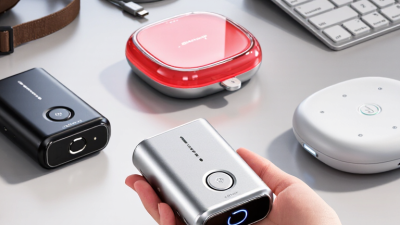
| 5 | Rechargeable electric hand warmer | Rechargeable lithium-ion battery, resistive or PTC heating element, temperature sensor and control circuit. | Assemble the battery and electronics, fit the heater and thermal interface, install the housing, and perform charging and functional tests. | Battery protection, charging behavior, temperature control, electrical safety and housing integrity. |
| 6 | Rechargeable warmer with power-bank function | Lithium-ion battery, heating element, charging-control electronics and USB output circuitry. | Integrate the heater and power-bank circuits, assemble the battery pack and enclosure, then verify both heating and USB output functions. | Battery protection, port operation, charging and discharge tests, temperature regulation and electrical checks. |
| 7 | Heated gloves or hand muff | Textile layers with flexible resistive heating elements, wiring and a battery or external power source. | Cut and sew the textile panels, position and secure the heating elements, route wiring, fit connectors and test the assembled product. | Heating-element continuity, wiring insulation, temperature distribution, seam strength and wash or care instructions. |
| 8 | Catalytic fuel hand warmer | Liquid fuel vapor reacting at a catalyst, commonly platinum; the device is designed for flameless catalytic heating. | Form and finish the metal body, assemble the burner and catalyst components, and inspect the fuel container and closures. | Fuel containment, component fit, operating instructions and safety warnings. Use and testing must follow the product's specific instructions. |
| 9 | USB-powered hand warmer | A resistive heating element powered through a USB connection; some designs include an internal rechargeable battery. | Install the heater and temperature-control components in a textile or molded housing, connect the power interface, and conduct operating tests. | Input and connector checks, insulation, heater operation, temperature control and cable or port durability. |
| 10 | Multi-zone or shaped electric warmer | One or more electric heating zones, temperature sensors and electronic controls, arranged for a specific hand-contact shape. | Design the housing or textile layout, position heating zones and sensors, assemble control electronics, and verify each zone before final packing. | Zone-by-zone functionality, temperature consistency, control response, electrical safety and final inspection. |