Why You Need a Toe Warmer for Cold Weather Comfort?
As winter approaches, many people overlook the importance of keeping their feet warm. Cold weather can be harsh, making even a short walk uncomfortable. This discomfort can lead to distractions and a lack of focus. A simple solution exists— the Toe Warmer.
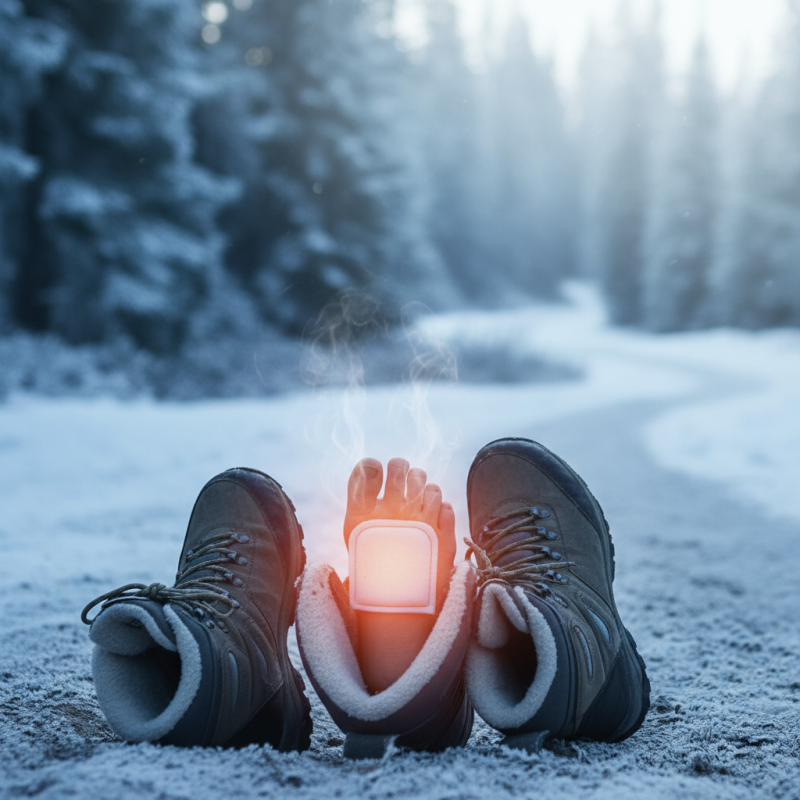
A Toe Warmer is small but powerful. It fits easily inside your shoes and generates heat when needed. Imagine stepping outside, feeling the chill, but knowing your toes are cozy. Many outdoor enthusiasts rely on toe warmers. They allow for longer, more enjoyable adventures.
However, some may underestimate their effectiveness. It’s easy to ignore small comforts. Yet, a cold day can turn miserable quickly. Investing in a Toe Warmer can change that experience. Reflect on your outdoor activities. Why suffer when comfort is just a product away? Warm toes can make all the difference.
Understanding the Importance of Toe Warmers in Cold Weather
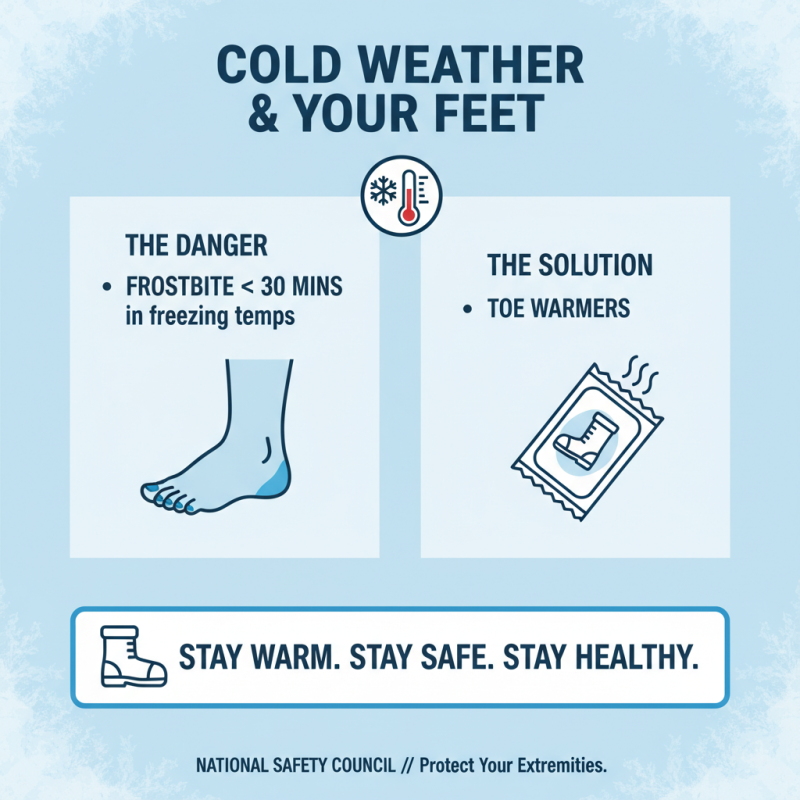
Cold weather can be brutal, especially for our extremities. According to the National Safety Council, cold exposure can lead to frostbite in less than 30 minutes in freezing temperatures. Toe warmers are an essential tool for protecting your feet. They help maintain warmth, comfort, and health during chilly days.
Research shows that keeping feet warm decreases the risk of cold-related injuries. A study published in the Journal of Thermal Biology points out that maintaining core temperature is vital for overall body function. When toes get cold, blood circulation decreases. This can lead to numbness and potential long-term issues. Wearing toe warmers can enhance comfort and improve circulation.
Many outdoor enthusiasts overlook the importance of foot warmth. A survey revealed that nearly 70% of participants experienced cold feet during winter activities. This discomfort can ruin a fun day outdoors. Proper insulation and warmth can make a significant difference. Investing in toe warmers is not just about comfort; it's about health and enjoyment during cold weather.
How Toe Warmers Work to Provide Heat and Comfort
As winter approaches, keeping your toes warm becomes essential. Toe warmers are innovative little gadgets designed to provide heat and comfort. They work through a simple chemical reaction that generates warmth. Often, you just need to activate them by shaking or squeezing. Once activated, they emit heat for several hours, ensuring your toes stay toasty in frigid conditions.
Think about moments spent outdoors in the cold. Your toes can quickly become numb, making any activity uncomfortable. With toe warmers, you're taking a proactive step. They fit easily inside shoes or boots, providing warmth right where you need it. It’s amazing how something so small can make such a big difference.
However, it's important to ensure proper application. Placing them directly on the skin can sometimes cause irritation. Listening to your body’s signals is vital, as comfort levels can vary.
The convenience of toe warmers makes them accessible for everyone. Imagine a long winter hike or a day of skiing. Your toes need protection against the bite of the cold. While toe warmers are effective, it's worth noting that they aren’t a one-size-fits-all solution. Some might find them too warm, while others enjoy the heat. Exploring different options might be necessary to find what works best for you.
Different Types of Toe Warmers Available on the Market
When temperatures drop, keeping your toes warm becomes essential. Various types of toe warmers cater to different needs. Some are disposable, while others are reusable.
Disposable toe warmers are convenient for short outings. They provide instant heat and can last for several hours. Simply open the package, and they’re ready to use.
Reusable toe warmers offer a sustainable option. They can be heated in a microwave or hot water. This method allows for greater control over temperature. However, they require some planning.
It may take time to heat them adequately. Consider the inconvenience of having to prepare them before heading out.
Electric toe warmers have gained popularity as well. They tend to provide consistent warmth throughout your activities. The downside is the need for a power source.
This can limit their use in remote locations. Each type has its merits and drawbacks. Finding the right toe warmer depends on your specific needs and activities.
Benefits of Using Toe Warmers for Outdoor Activities in Winter
When heading outdoors in winter, cold feet can be a significant distraction. Studies show that up to 30% of outdoor enthusiasts experience foot discomfort due to cold temperatures. A toe warmer could be the solution. These small but effective products generate heat, making your winter activities more enjoyable.
The benefits extend beyond comfort. According to the National Safety Council, cold extremities can lead to decreased performance and fatigue. Keeping your toes warm helps maintain circulation, thus improving overall body temperature regulation. Whether skiing, hiking, or ice fishing, warm feet can mean longer and safer outings.
While toe warmers help, it’s crucial to note that not all products perform the same. Some might not stick well or provide long-lasting heat. Users sometimes find warmth uneven across the foot, leading to inconsistent comfort levels. Experimenting with different types can help find the best fit for your needs.
Tips for Choosing the Right Toe Warmer for Your Needs
When the temperature drops, keeping your toes warm is essential. Cold feet can lead to discomfort and reduced circulation. According to a survey by the National Safety Council, over 30% of people reported less productivity due to cold extremities. Hence, selecting the right toe warmer becomes crucial.
Consider the type of toe warmer you need. There are disposable and rechargeable options available. Disposable warmers often provide up to 8 hours of heat. In contrast, rechargeable varieties can last longer but may need access to power. Checking the temperature range is also important. Most effective toe warmers reach temperatures between 100°F to 130°F.
Think about the material and design as well. Some warmers use natural ingredients, while others rely on chemicals. Materials can affect comfort and safety. Ensure the toe warmer fits snugly but isn't too tight. Research shows that a proper fit can increase effectiveness. It’s vital to reflect on your specific needs. Different activities require different solutions.