Choosing the right Toe Warmer manufacturer in China requires more than comparing prices. Global buyers must examine product performance, factory capability, documentation, and communication quality. A warmer that feels effective in a sample may perform differently across winter shipments. Storage conditions, activation time, adhesive strength, and packaging quality all matter.
This guide introduces ten Chinese manufacturers serving international buyers. The selection focuses on practical purchasing factors, including OEM experience, production capacity, quality-control systems, export support, and customization options. We also consider common product details, such as iron-based heating materials, individual foil packaging, adhesive backing, and stated warming duration. These details help buyers compare suppliers with greater confidence.
Still, no online ranking can replace direct verification. Supplier information may change. Buyers should request current test reports, product samples, factory records, and clear commercial terms before placing an order. Independent inspection can also reveal issues that polished catalogues hide. That step is easy to overlook. It should not be.
The manufacturers discussed here may suit outdoor retailers, sports brands, travel companies, wholesalers, and seasonal distributors. Their strengths may differ. One factory may offer flexible private labeling, while another may provide stronger volume capacity or faster development support. The most suitable partner depends on climate, target users, packaging requirements, and destination-market expectations. Careful communication remains essential. A dependable Toe Warmer supplier should provide consistent batches, realistic lead times, responsive service, and traceable quality information.
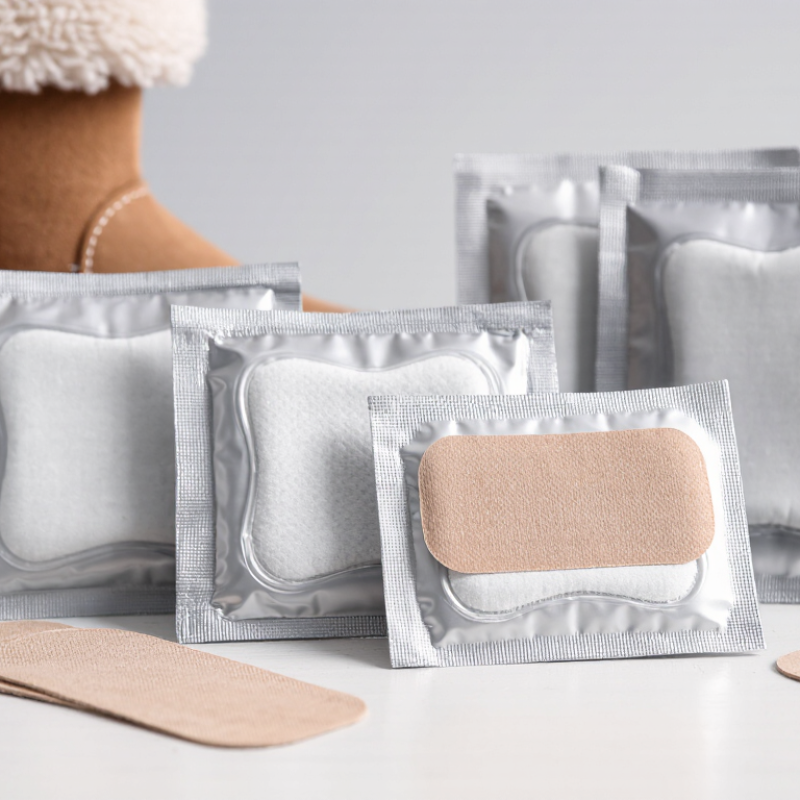
Toe warmers are compact heat-producing products designed to keep feet comfortable in cold conditions. They usually contain air-activated materials, adhesive backing, or reusable thermal inserts. When exposed to air, some warmers gradually release heat for several hours. Others fit inside socks, boots, or shoe insoles. Their size matters. A bulky warmer can reduce comfort during walking or outdoor work.
Global buyers often source toe warmers from China because the country has mature production networks for nonwoven fabrics, packaging, adhesives, and heat-generating components. Manufacturers can support different shapes, activation times, packaging designs, and order volumes. China also offers established export channels and flexible customization for seasonal demand. However, low pricing can mislead. Product consistency, storage conditions, and temperature performance still require careful verification. Buyers should request samples, test warming duration, and review material documentation before placing larger orders. Safety instructions must be clear and suitable for the target market.
Tips: Compare several samples under similar temperatures. Check sealing quality, odor, shelf life, and package labeling. Ask suppliers how they control batch consistency. A small pilot order is often wiser than a large first shipment. It may cost more initially, but it can reveal weak adhesion or uneven heating before customer complaints appear.
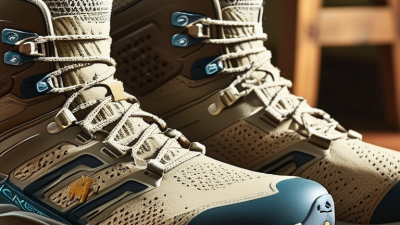
China Top 10 Toe Warmer Manufacturers for Global Buyers
How to Evaluate China’s Top Toe Warmer Manufacturers
A credible supplier should prove more than low pricing. Grand View Research reported that the global heated clothing market reached about USD 1.9 billion in 2023. This growth increases competition, but it also makes factory verification essential. Request business licenses, production photos, audit records, and recent export references. Do not rely on polished catalogues alone.
Check the warmer’s heat curve, activation time, duration, and package stability. For air-activated products, ask for test data covering oxygen exposure, humidity, and storage temperature. A practical sample test is simple: place warmers inside winter boots for eight hours, then record temperature every 30 minutes. The best factory should provide batch-level inspection reports, not only laboratory claims. Look for quality systems aligned with ISO 9001 and chemical safety requirements in the destination market.
Cost needs careful interpretation. A lower quote may hide thinner materials, weaker adhesive, or inconsistent filling. Compare total landed cost, including packaging, testing, shipping, and rejected units. The International Trade Centre’s trade data can help buyers compare China’s export performance by relevant product categories, although product classifications are not always specific to toe warmers. That limitation matters. I would also inspect carton compression, warning labels, and multilingual instructions before placing a large order. A factory may pass one sample test and still miss control during peak winter production. Insist on pre-shipment inspection and a clearly written replacement policy.
| No. | Evaluation Dimension | Recommended Weight | Buyer Benchmark | Evidence to Request | Main Risk Signal |
|---|---|---|---|---|---|
| 1 | Product Safety Design | 18% | Over-temperature protection, insulated heating elements, stable temperature control, and protection against short circuits. | Circuit diagrams, safety test reports, temperature test records, and production inspection procedures. | No independent safety testing or unclear protection mechanisms. |
| 2 | Heating Performance | 14% | Uniform warming, repeatable temperature output, and no excessive hot spots during continuous operation. | Thermal images, heating curves, operating-time tests, and sample test results under normal load. | Large temperature differences between samples or unstable heating output. |
| 3 | Battery and Charging Compliance | 13% | Battery capacity should match the declared operating time, with suitable charging protection and transport documentation. | Battery specification, UN 38.3 test summary where applicable, IEC 62133-2 documentation where applicable, and charger test reports. | Unverified battery cells, exaggerated capacity claims, or missing shipping documents. |
| 4 | Material and Wear Resistance | 10% | Fabric, insulation, wiring, and seams should withstand repeated bending, washing requirements, and normal foot movement. | Material composition, abrasion tests, flexing tests, wash-care instructions, and pre-production samples. | Weak seams, exposed wires, shrinking fabric, or unclear cleaning instructions. |
| 5 | Applicable Market Certifications | 12% | Documentation should match the target market, product architecture, voltage, battery configuration, and labeling requirements. | Relevant CE, UKCA, FCC, RoHS, EMC, electrical safety, and other destination-market documents as applicable. | Generic certificates that do not identify the actual product or manufacturer. |
| 6 | Quality Management and Inspection | 10% | Documented incoming-material inspection, in-process checks, final inspection, and corrective-action procedures. | Quality manual, inspection checklist, defect classification, sample inspection records, and audit reports. | Quality control depends only on visual inspection or undocumented operator checks. |
| 7 | Customization Capability | 8% | Ability to modify size, heating levels, controller layout, packaging, labels, and user instructions without compromising safety. | Engineering drawings, sample-development process, tooling responsibility, and written change-control procedure. | Customization is promised without technical drawings, sample approval, or testing plans. |
| 8 | Production Capacity and Lead-Time Control | 6% | Capacity should support forecasted demand, seasonal peaks, and replenishment schedules with clearly defined production milestones. | Capacity statement, production schedule, material-planning process, sample lead time, and mass-production timeline. | Unclear production ownership or repeated changes to promised delivery dates. |
| 9 | Packaging and Export Readiness | 5% | Packaging should protect the product, meet labeling requirements, and support battery transport where relevant. | Packaging specification, carton-drop test, barcode and label files, packing list, and export documents. | Insufficient protection, incorrect labeling, or incomplete battery-related documentation. |
| 10 | After-Sales Support and Traceability | 4% | The supplier should provide warranty terms, spare-part support, complaint handling, and batch-level traceability. | Warranty policy, service-response targets, replacement-part list, batch codes, and corrective-action reports. | No written warranty, slow response, or inability to trace defective batches. |
Suggested evaluation method: Score each dimension from 1 to 5, multiply by the recommended weight, and verify all safety, battery, and destination-market compliance documents before placing a production order.
China’s top ten toe warmer manufacturers are best compared by product strengths, not catalogue size.
The strongest suppliers usually specialize in one clear advantage:
fast chemical activation, stable adhesive layers, rechargeable heating, thin ski-fit designs, or economical bulk packaging.
Some factories also offer oxygen-aware packaging and documented temperature testing.
These details matter during winter transport.
Grand View Research’s 2024 heated clothing analysis identifies outdoor recreation and cold-weather work as major demand drivers. That trend supports China’s strong manufacturing base for compact warming products.
Leading manufacturers commonly test heat curves, activation time, surface temperature, and storage stability.
Better suppliers provide batch records and samples before large orders.
A practical buyer should test products at minus 10°C, not only in a warm office. Small differences become obvious then.
Product strength varies across the ten leading suppliers. One may deliver warmer output, while another controls skin-contact temperature more carefully.
Some excel at private packaging and flexible order quantities.
Others provide stronger adhesive performance for skiing or long-distance travel.
Rechargeable models need extra checks for charging protection and cycle durability.
Independent laboratory verification remains valuable.
Factory claims are useful, but not perfect. A missed test condition can distort the result.
According to Fortune Business Insights’ 2024 market outlook warming products continue gaining attention through outdoor and personal comfort applications.
Buyers should compare measured performance, documentation, and failure rates before selecting a Chinese partner.
When comparing Chinese toe warmer manufacturers, certifications should match the product type. Electric warmers may require CE, RoHS, and REACH compliance for European markets. Battery-powered models also need tested cells and transport documentation, including UN 38.3 reports. IEC-based safety testing can help assess insulation, overheating, charging, and surface temperature risks. Chemical warmers need accurate Safety Data Sheets, ingredient control, and compliant packaging. Certification alone is not enough.
Ask for recent test reports, factory quality records, and batch traceability. ISO 9001 can indicate a controlled management system, but it does not prove product safety. Request samples from different production lots. Check heating time with a timer, not only a supplier spreadsheet. Small differences matter. A reliable manufacturer should explain failure rates honestly. Some factories still provide incomplete certificates or outdated reports. That deserves careful review.
Export capability also affects supply stability. Experienced manufacturers should support export cartons, multilingual labels, barcode data, customs documents, and destination-specific packaging. For battery products, confirm freight procedures before placing a large order. Chemical warmers may require additional shipping declarations. An on-site audit can reveal storage conditions, worker training, and final inspection practices. Yet audits have limits. A clean visit cannot guarantee every future batch. Clear specifications, pre-shipment inspections, and written corrective actions remain necessary for dependable global purchasing.
Global buyers need more than a low quotation when choosing a Chinese toe warmer supplier. The right partner should match product safety, seasonality, and delivery expectations. Request factory photos, production records, and recent quality reports. Do not rely on polished samples alone. A sample may hide inconsistent sealing or uneven heat distribution. Ask how the supplier tests activation time, surface temperature, moisture resistance, and shelf life. For electric models, verify battery documentation and transport requirements for each destination.
A clear specification prevents expensive misunderstandings. Record dimensions, materials, adhesive strength, packaging, language requirements, and acceptable defect limits. Ask for a pre-production sample before approving mass production. Then use an independent inspection or a documented internal inspection plan. Confirm capacity during peak winter months, not only in quiet periods. Discuss minimum order quantities, payment stages, lead times, and delay handling in writing. A responsive sales contact is helpful, but technical answers matter more. Confirm applicable safety standards through current test documents, not verbal promises.
Reliable cooperation grows through small, measurable checks. Review batch photos, carton markings, and shipment records before loading. Keep one retained sample from every approved batch. It helps investigate odor, weak adhesion, or reduced warmth later. Do not chase the lowest price. Cheap materials can increase returns and damage customer trust. Still, no supplier is perfect. Failed samples should be reviewed honestly, even when the mistake is yours. A spreadsheet cannot replace judgment. Adjust the specification when evidence supports change. That habit builds a safer, more stable supply relationship.
This 100-point supplier evaluation framework helps global buyers compare toe warmer manufacturers without relying on company or brand names. Buyers should prioritize documented compliance, verified heating performance, product safety, batch consistency, production capacity, and delivery reliability before placing an order.